The mainstay of our treatment is always an in-depth assessment and development of an individualized, exercise-based rehabilitation plan. However, we also may utilize a number of unique adjunct treatments and modalities. Click through the list to learn more about them!
-
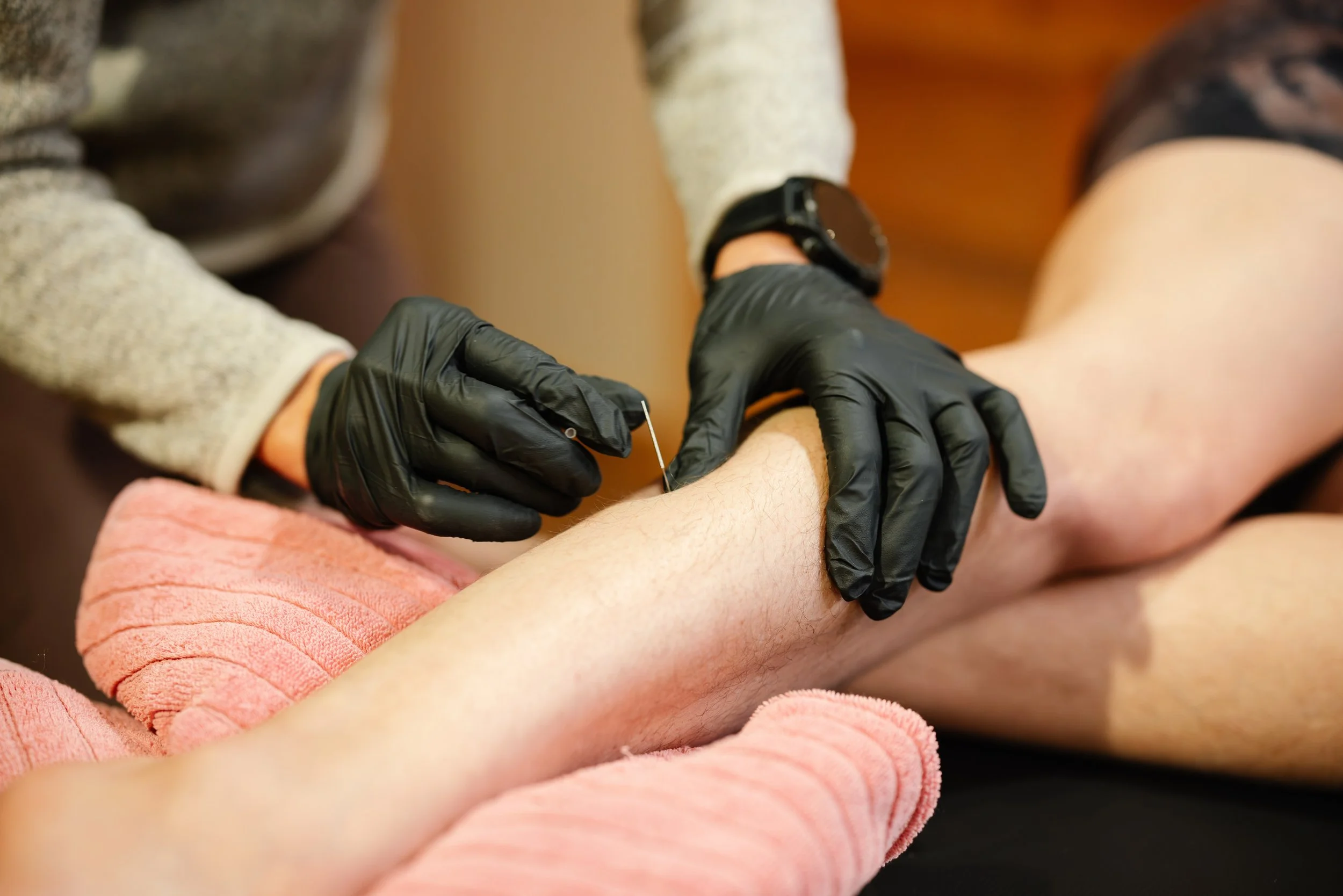
Dry needling is a modern, evidence-based treatment which consists of inserting thin accupuncture-style needles into muscle tissue for pain relief, reduction of muscle tension, and improvements in range of motion. One of the fastest ways to impact symptoms related to myofascial dysfunction!
-
Manual techniques designed to restore motion and reduce pain by moving a joint through a new range. “Manipulation” specific refers to techniques performed at a high velocity and often resulting in a cavitation - the “crack” or “pop” you get when cracking your knuckles. These techniques don’t put anything back “in place” mechanically, but can have powerful effects on pain through complex physiologic processes mediated through the nervous system. But the part that matters: they can help get you moving better with less pain in minutes!
-
Applying pressure by “scraping” with metal tools can help increase local blood flow and speed up tissue healing.
-
We use the Tindeq Progressor, a tool originally developed by climbers, to assess maximal strength and rate of force development. It can be attached to portable finger board blocks to test finger strength, but also has broader strength testing applications for muscle groups like the quadriceps, which are key in post-operative rehab. We use dynamometer-based strength training to give you real objective feedback on your areas of weakness and on progress over time!